
THE QUIET ALCHEMY TABLE OF STONES
FOUNDATION STONES: The stones of stability, endurance and strength.
Petrified Wood The Keeper of Deep Time
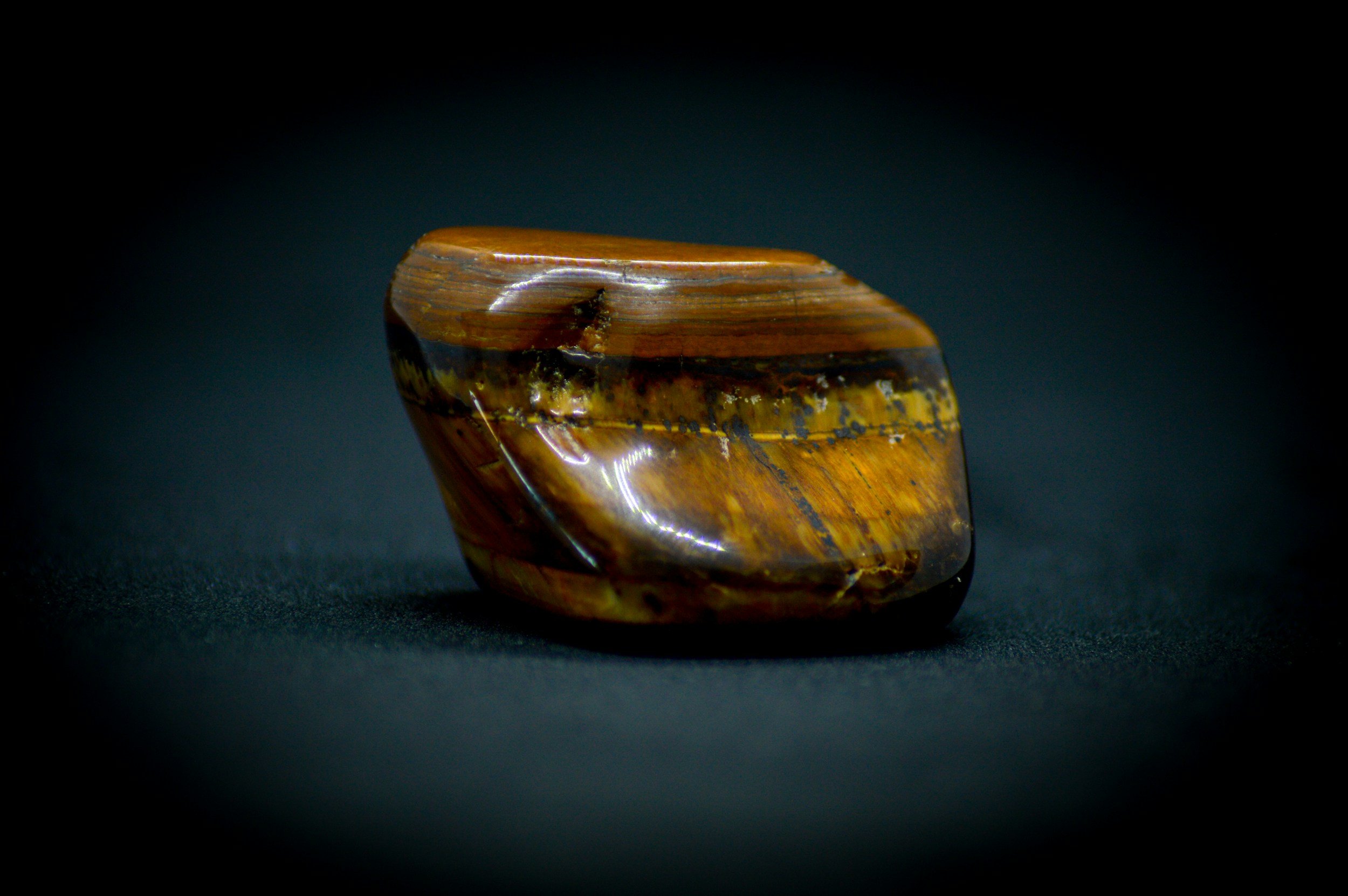
Tiger Iron The Engine
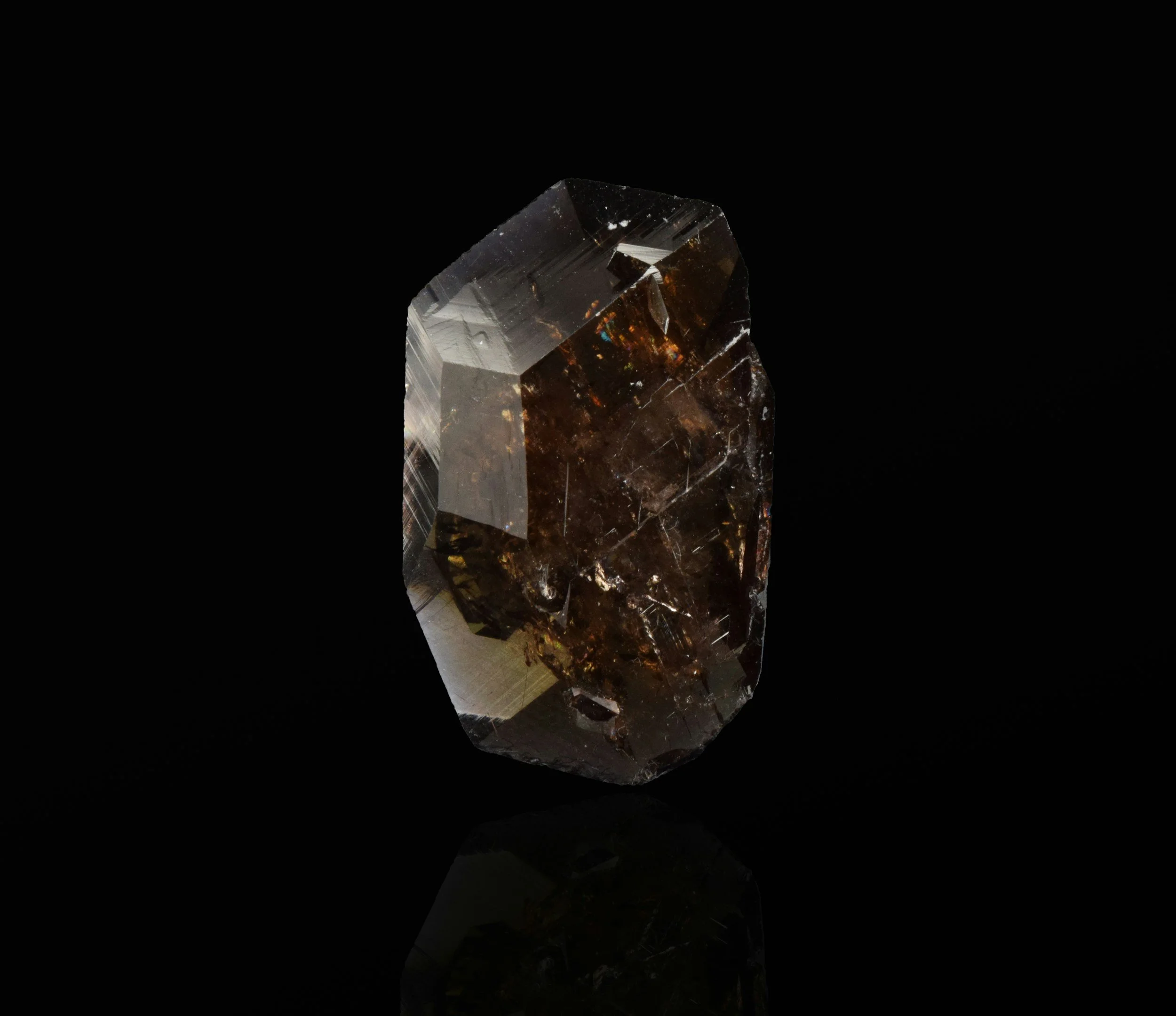
Smoky Quartz The Stone of Endurance
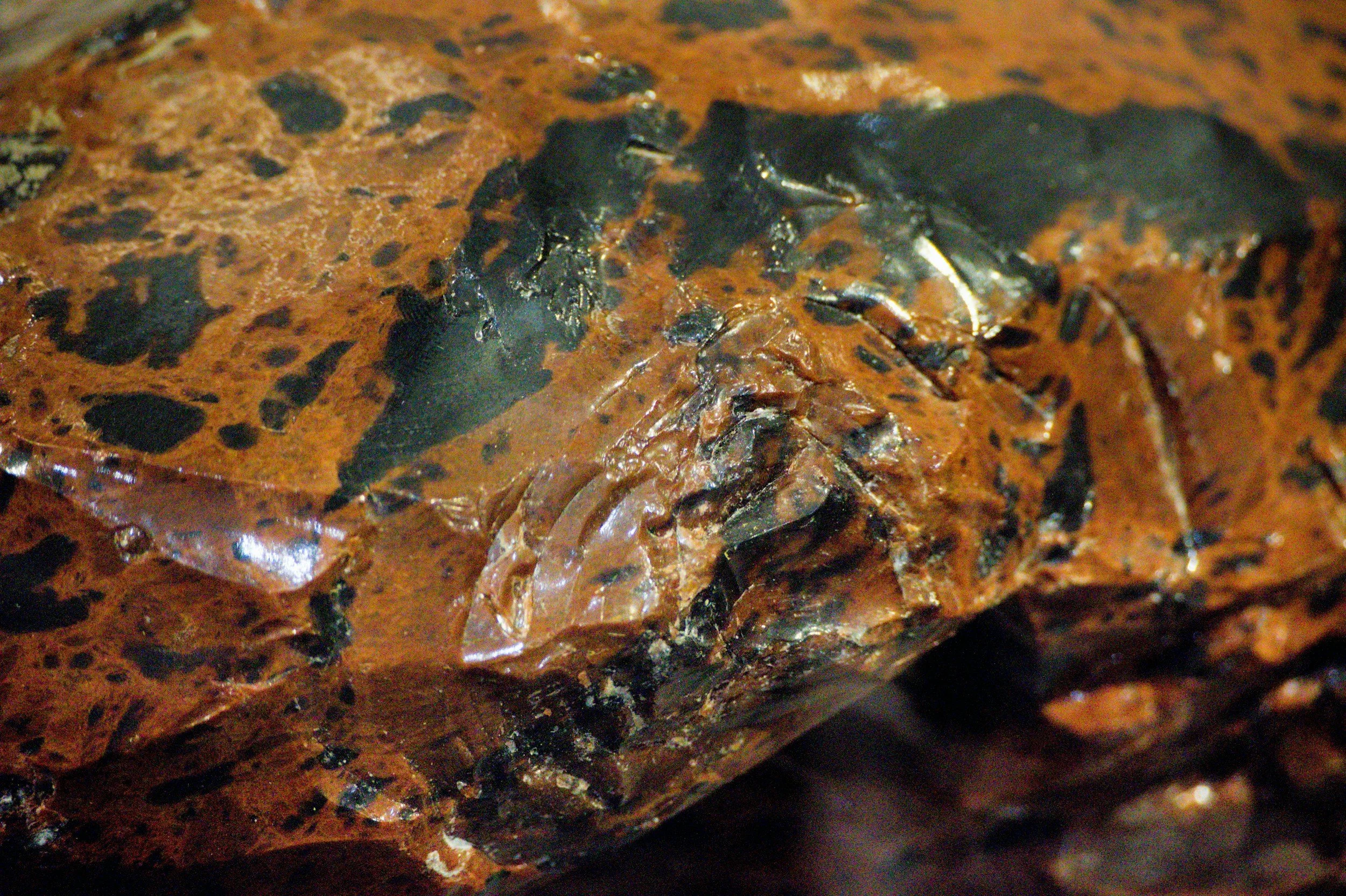
Mahogany Obsidian The Tempered Ember
Tree Agate The Rooted Guardian
VISION STONES: The stones of awareness, wisdom and perception.
Labradorite The One Who Sees
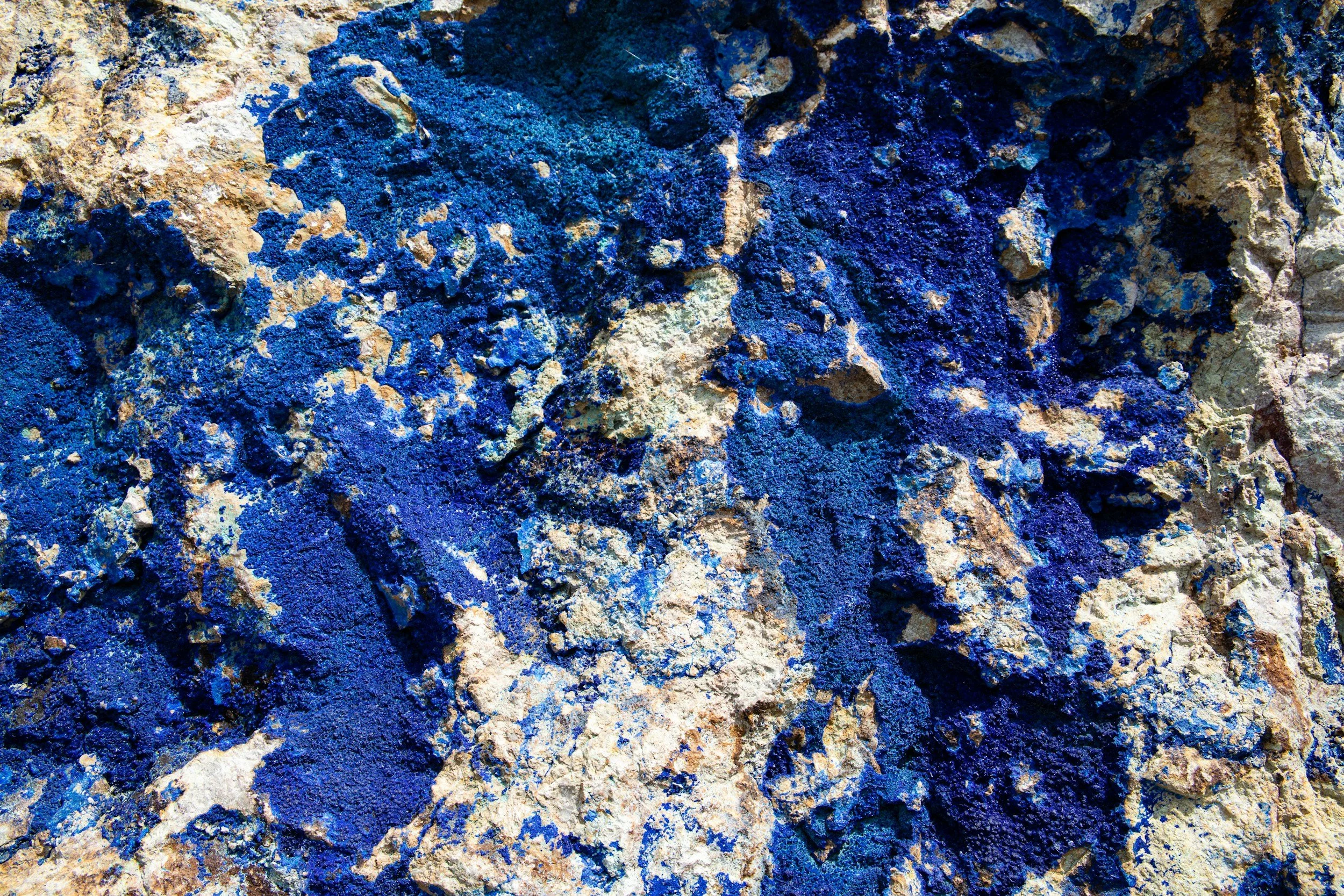
Lapis Lazuli The Ancient Scholar
Sodalite The Rational Mind
Yooperlite The Illuminated Stone
Blue Tiger Eye The Watchtower
GROWTH STONES: The stones of cultivation and personal development.
Moss Agate The Cultivator
Rose Quartz The Open Hand
Chevron Amethyst The Inner Compass
Dragon Blood Jasper The Guardian Warrior
MOMENTUM STONES: The stones of movement and purposeful action.
Rutilated Quartz Time Lightning
Red Tiger Iron The Forge
Tiger Iron The Engine
TRANSFORMATION STONES: The stones of change, reflection and evolution.
Obsidian The Mirror
Golden Sheen Obsidian The Hidden Sovereign
Amethyst The Companion of Limitless Possibilities
JOY & ADAPTABILITY STONES:
Dalmatian Jasper The Playful Guardian
Namibian Blue Lace Agate The Quiet Voice
Aaron A. Temple - Quiet Alchemy LLC, Owner – Founder – Artisan
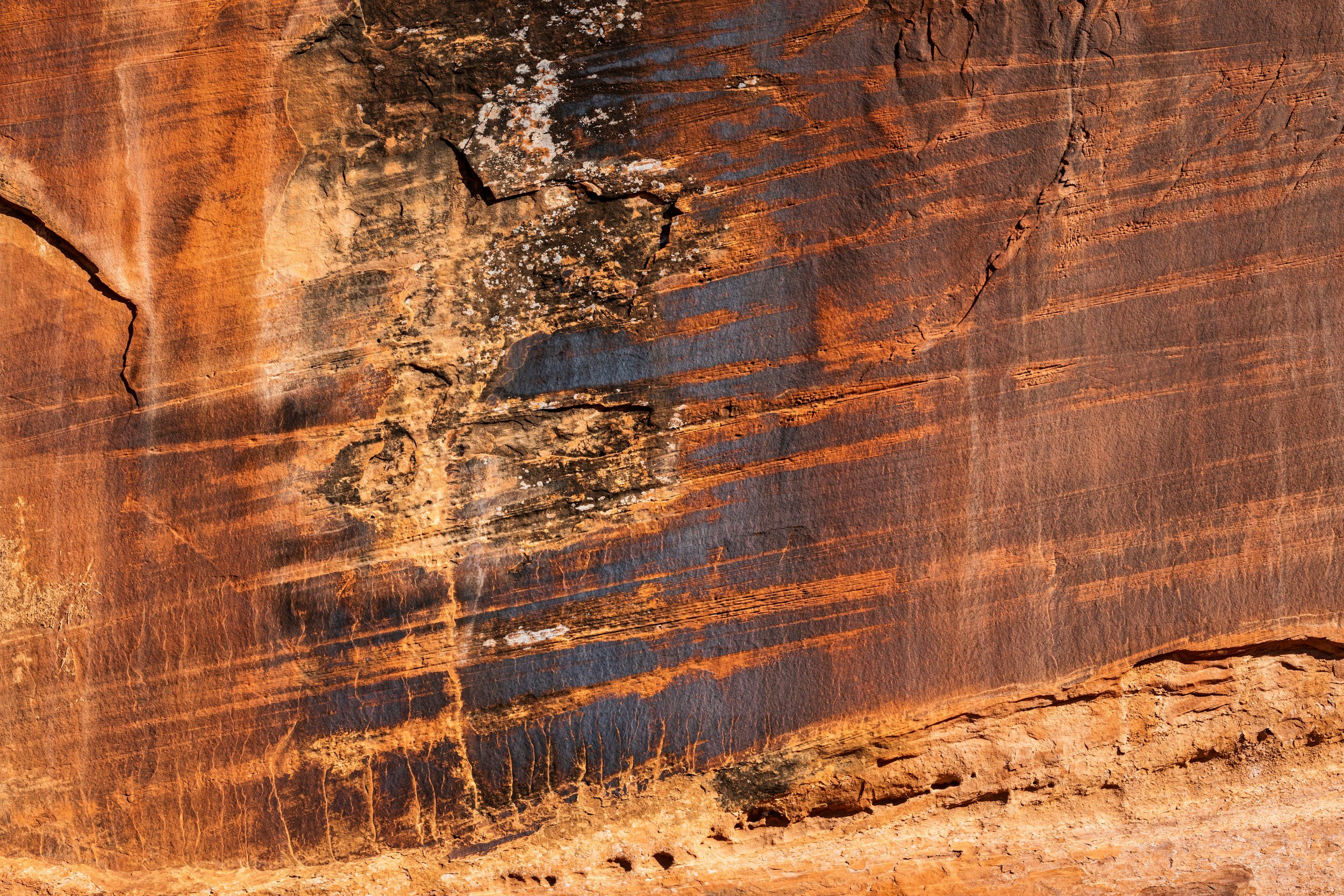
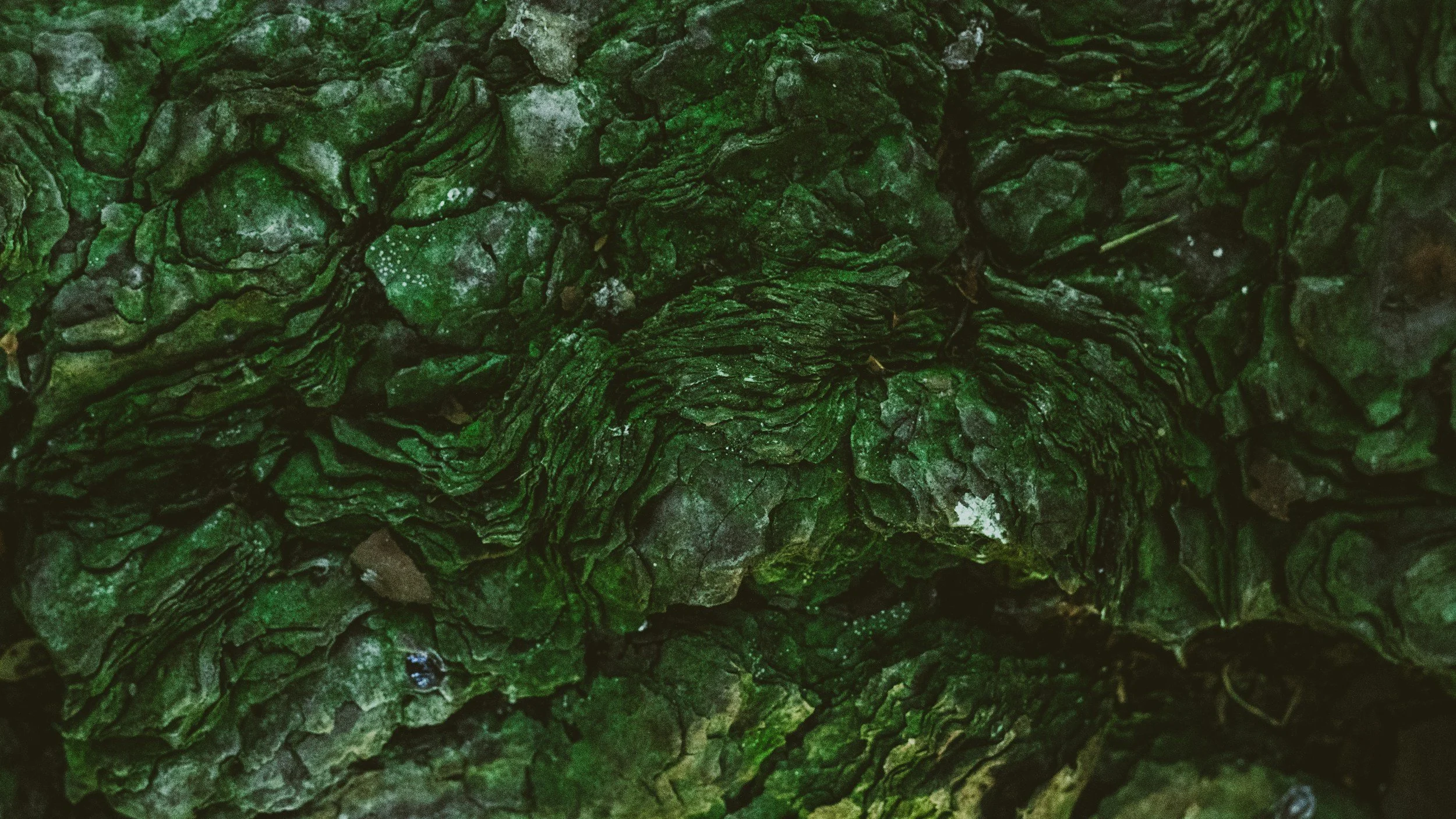
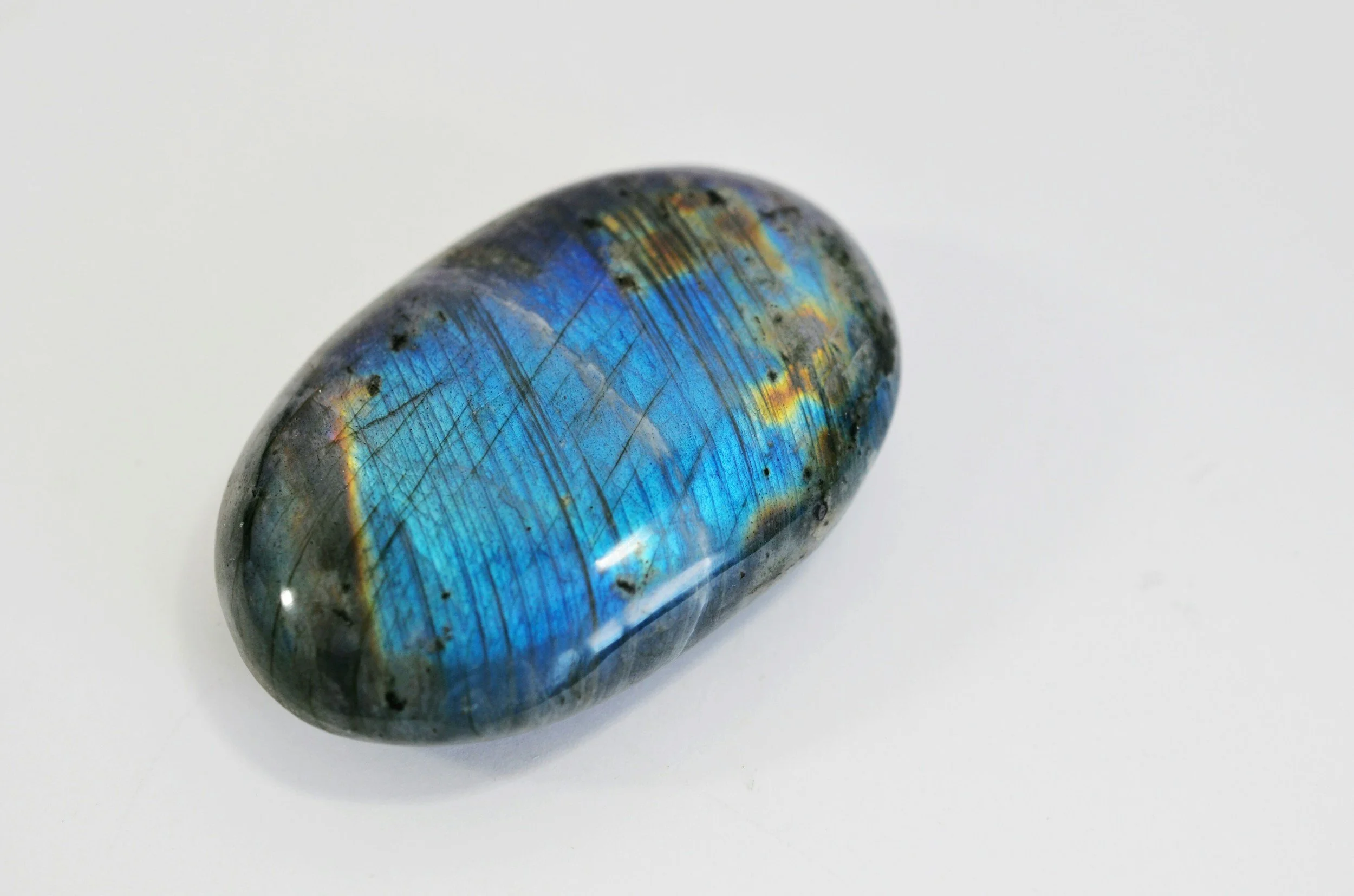
All images below are from my personal collection and/or currently in-progress on my workbench
A Field Guide to The Materials of Quiet Alchemy
Every stone carries a history far older than humanity. Long before tools, languages, or civilizations, the materials I now shape into jewelry were forming beneath ancient seas, rising through volcanic fire, or crystallizing slowly in silent caverns beneath the Earth’s crust.
The stones that find their way through my hands at Quiet Alchemy are not merely decorative materials. They are fragments of geological time. Thay are records of pressure, heat, transformation, and endurance. Each specimen has traveled an immense journey before ever reaching human hands. Cracking a geode or revealing beneath a dirty surface provide me the indescribable amazement and awe to be the first eyes, the first being to behold such ancient beauty and sacred geometry.
My role as an artisan is not to dominate that history, but to reveal it. Through careful shaping, polishing, and setting, the inherent character of each stone is allowed to emerge. Veins, fractures, crystalline structures, and natural patterns are preserved rather than erased. What results is not simply jewelry, but a continuation of the stone’s personal story.
The stones featured here represent some of the most fascinating geological materials found on Earth. Each with its own origin, composition, and quiet presence.
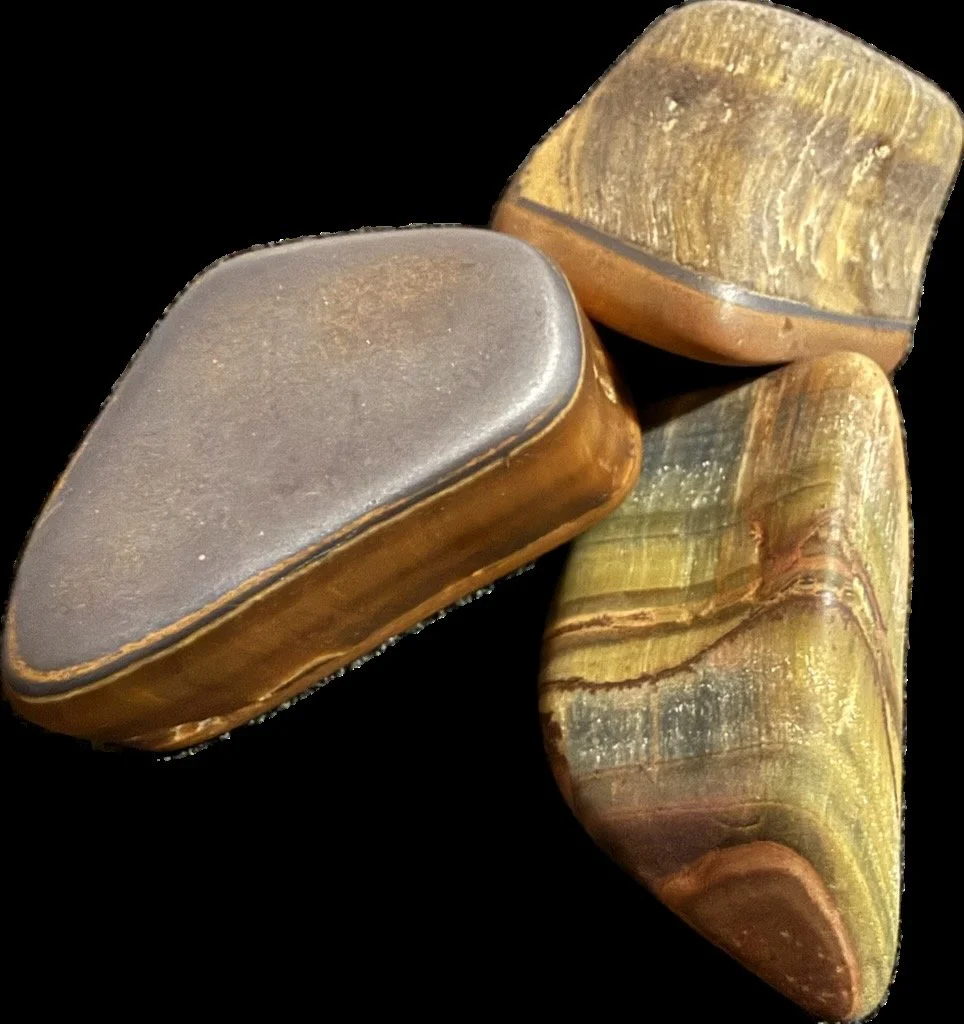
Tiger Iron
Tiger Iron is one of nature’s most visually striking composite stones, formed through the fusion of three powerful minerals: Tiger’s Eye, Hematite, and Red Jasper.
The stone originated more than two billion years ago during the early formation of Earth’s continental crust. It belongs to a class of ancient geological structures known as banded iron formations, created when iron-rich sediments settled in primordial oceans and were later compressed and metamorphosed deep within the planet.
Over immense spans of time, the iron-rich layers transformed into hematite while silica-rich layers became jasper. In certain regions, fibrous crocidolite asbestos was later replaced by quartz, producing the shimmering golden bands known as Tiger’s Eye.
The result is a stone that displays alternating bands of metallic silver, deep red, and radiant gold. Each layer represents a different stage of Earth’s geological history.
Tiger Iron is most commonly found in Western Australia, one of the few regions where these ancient formations remain exposed.
Because of its density and layered structure, Tiger Iron is exceptionally durable and polishes to a deep, glass-like finish, making it ideal for jewelry and carved objects.
Within Quiet Alchemy, Tiger Iron represents balance under pressure and strength forged through immense geological forces.
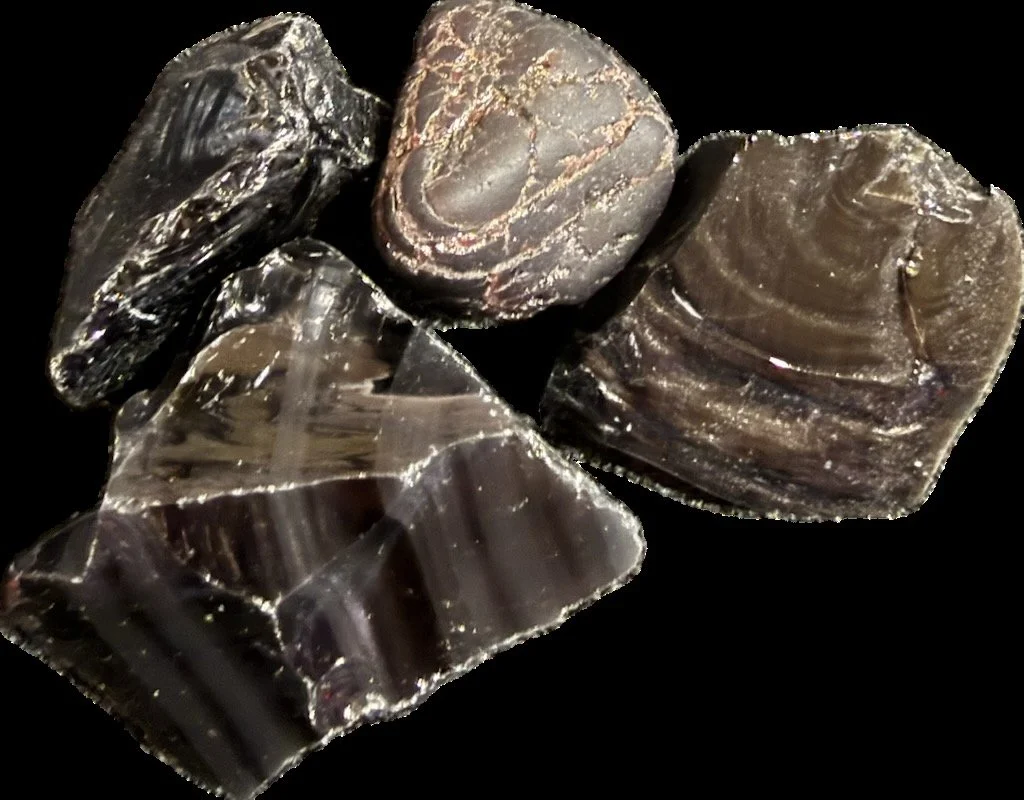
Obsidian
Obsidian is volcanic glass that is formed directly from molten lava.
Unlike most rocks, obsidian does not crystallize as it cools. Instead, the lava cools so rapidly that atoms cannot arrange themselves into mineral structures. The result is a natural glass with an extremely smooth and sharp fracture.
This property allowed ancient cultures to use obsidian for tools and weapons capable of producing edges sharper than modern surgical steel.
Obsidian forms primarily in regions of silica-rich volcanic activity, including areas of Mexico, Iceland, the western United States, and parts of Central America.
Different varieties exist depending on the impurities present during formation, producing forms such as snowflake obsidian, mahogany obsidian, rainbow obsidian, or golden sheen obsidian.
Within Quiet Alchemy, Obsidian represents the raw force of Earth’s volcanic power frozen in an instant.
Meteorite
Meteorites are fragments of cosmic material that have survived their passage through Earth’s atmosphere and landed upon the planet’s surface. Unlike most terrestrial stones, meteorites originated far beyond Earth itself.
Many meteorites are fragments of asteroids formed during the earliest stages of our solar system, more than 4.5 billion years ago. Some represent material that has remained largely unchanged since the formation of the planets.
There are several primary types of meteorites. Iron meteorites consist primarily of iron and nickel alloys and often display striking crystalline patterns when polished and etched. Stony meteorites contain silicate minerals similar to those found in terrestrial rocks. Stony-iron meteorites contain a remarkable mixture of both metallic and crystalline materials.
During their journey through Earth’s atmosphere, meteorites develop a dark outer layer known as a fusion crust, created as the outer surface briefly melts from intense heat generated by atmospheric entry.
Because meteorites originate beyond Earth, they offer scientists rare insights into the early formation of planets and the materials present in the primordial solar system.
Within Quiet Alchemy, meteorites represent the meeting point between cosmic time and earthly craft. Fragments of the universe carried across space before finding their way into human hands.
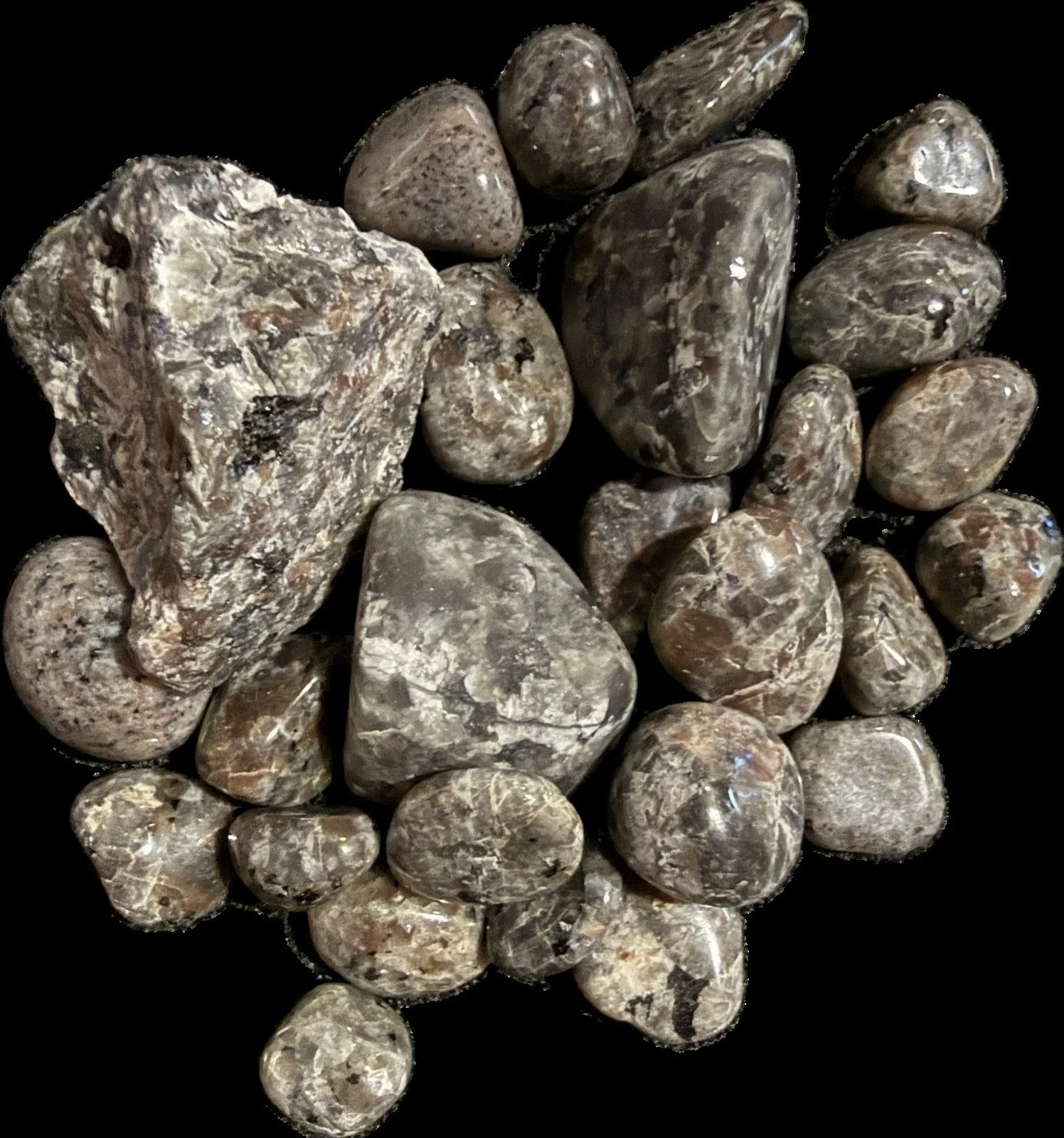
Yooperlite
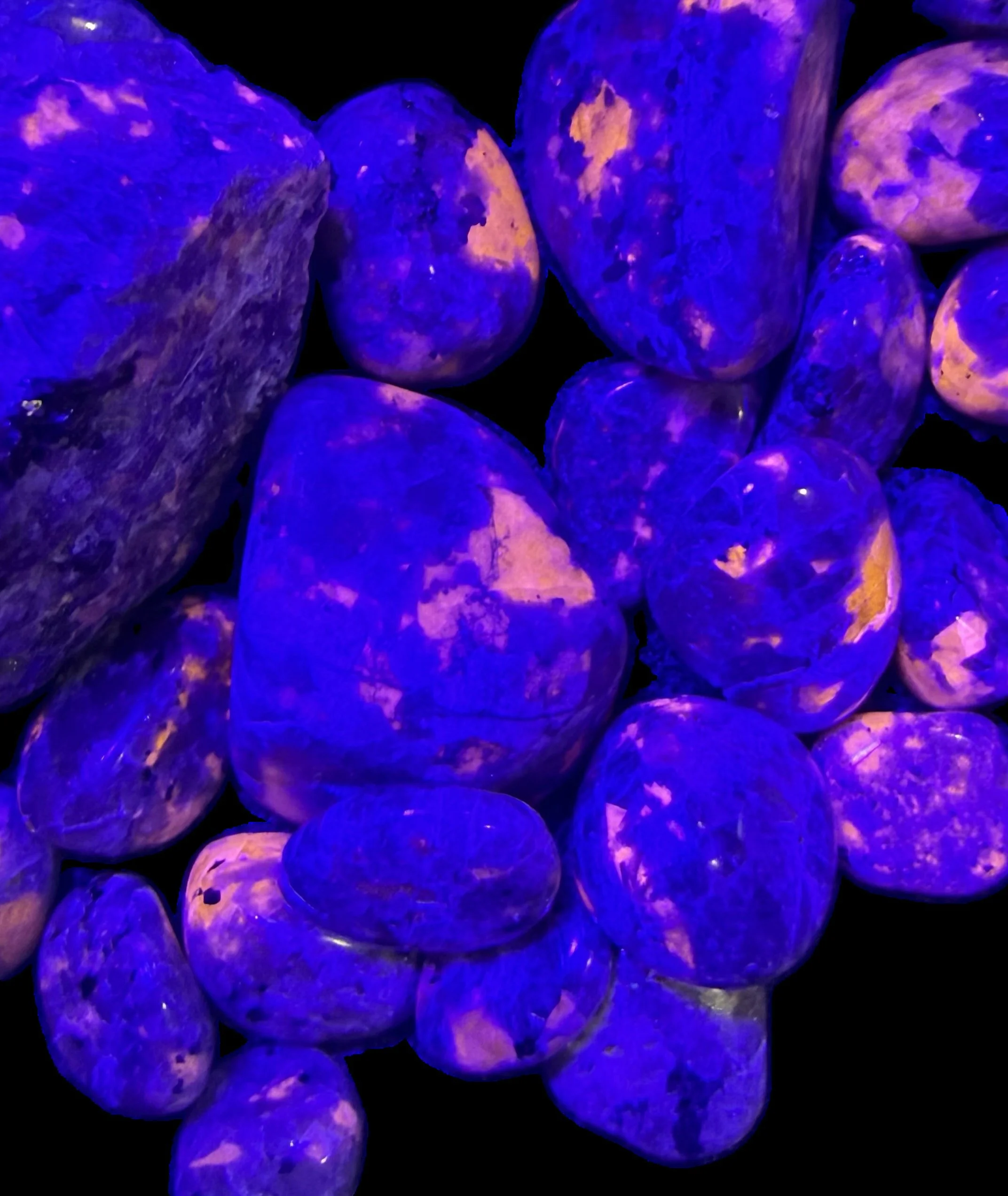
First publicly identified in 2017 along the shores of Lake Superior, Yooperlite is actually a form of syenite rich in fluorescent sodalite. Under normal light it appears as an ordinary gray stone, but under ultraviolet light it erupts into vivid patterns of glowing orange and gold.
This remarkable fluorescence occurs because sodalite contains trace elements that react to ultraviolet radiation, causing the mineral to emit visible light.
The stones are found primarily along the Upper Peninsula of Michigan, where glacial activity transported the material across the landscape during the last Ice Age.
Although the rock may appear humble at first glance, its transformation under ultraviolet light reveals an entirely different character hidden within the stone.
This dual nature makes Yooperlite one of the most fascinating modern discoveries in geology. A definite reminder that even familiar landscapes still hold secrets waiting to be revealed.
Within Quiet Alchemy, Yooperlite represents hidden brilliance revealed only under the right conditions.
Jasper Families
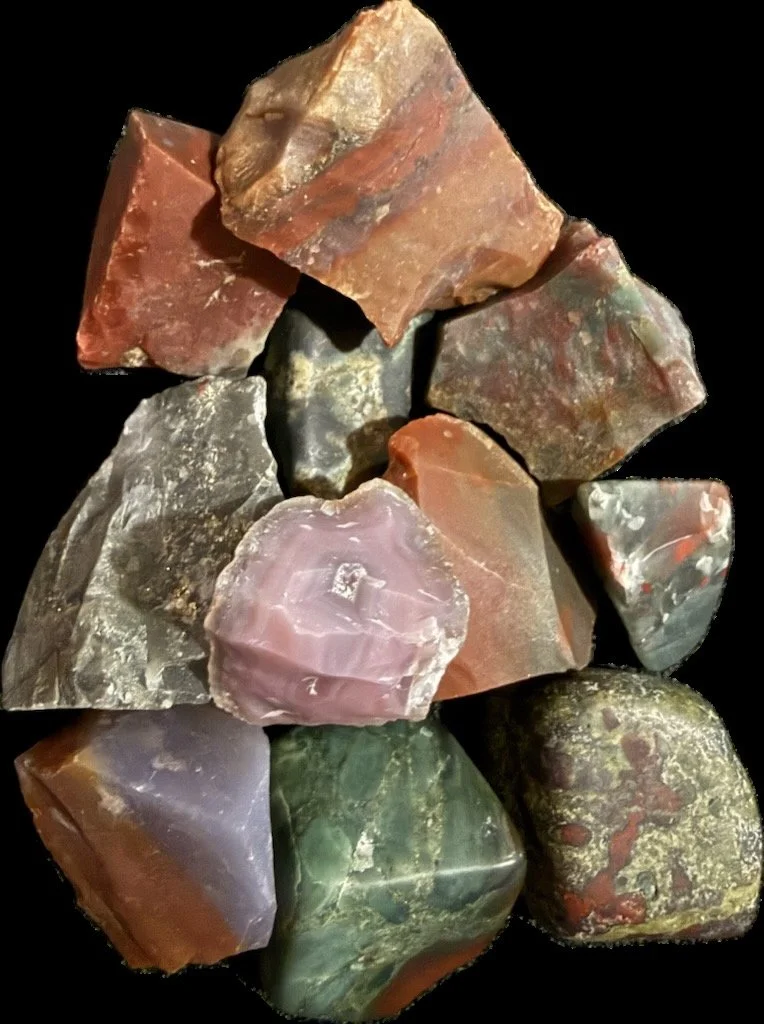
Jasper is not a single mineral, but a broad family of microcrystalline quartz varieties colored by various mineral impurities.
Iron oxides produce red and yellow varieties, while other elements can generate greens, browns, and even complex multicolored patterns.
Unlike transparent quartz crystals, jasper forms as dense opaque masses, often displaying striking bands, swirls, or landscapes created by ancient sedimentary processes.
Many jaspers formed in ancient sea beds or volcanic environments where silica-rich fluids gradually replaced existing rock layers.
Some of the most famous varieties include Red Jasper, Kambaba Jasper, Dragon Blood Jasper, Picture Jasper, and Ocean Jasper.
Each variety reflects unique geological conditions and mineral compositions.
Because of its hardness and durability, jasper has been used for tools, carvings, and jewelry for thousands of years.
Within Quiet Alchemy, Jasper represents Earth’s ability to create beauty through patience and pressure.
Sodalite
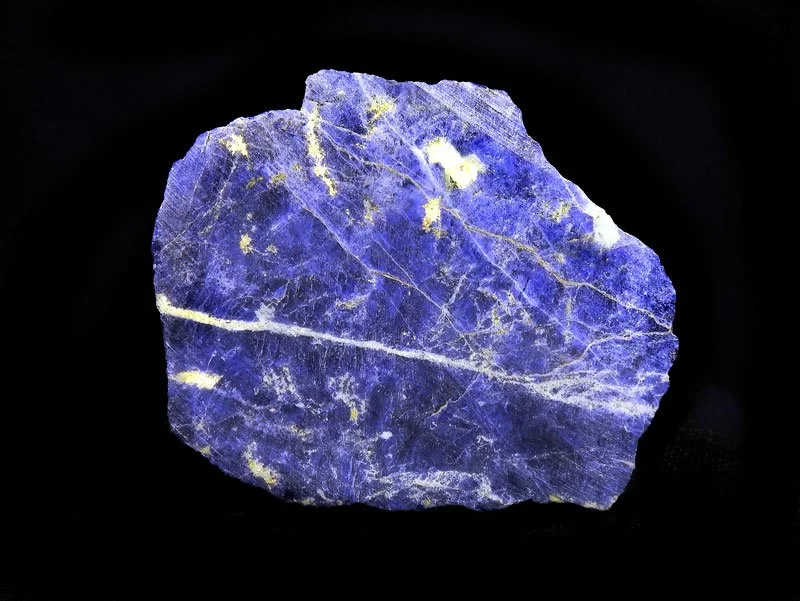
Sodalite is a rich blue mineral known for its deep color and striking white veining, often resembling distant clouds crossing a twilight sky. It belongs to a group of minerals known as feldspathoids, which form in silica-poor igneous environments.
The mineral was first formally described in the early nineteenth century, though it gained international recognition after large deposits were discovered in Ontario, Canada, where it became widely used as an ornamental stone.
Sodalite typically forms within igneous rocks such as nepheline syenite, where it crystallizes from magma during the cooling process. The mineral’s vivid blue coloration results from the presence of sulfur within its crystal structure.
One of Sodalite’s most fascinating properties is its potential for fluorescence under ultraviolet light, where certain specimens glow with brilliant orange tones. This phenomenon occurs because trace elements within the mineral react to ultraviolet radiation and emit visible light.
Sodalite is also the mineral responsible for the striking fluorescence seen in the stones commonly known as Yooperlite found along the shores of Lake Superior.
Within Quiet Alchemy, Sodalite represents hidden illumination by only showing its truest color and energy under the right conditions.
Lapis Lazuli
Lapis Lazuli has captivated humanity for thousands of years.
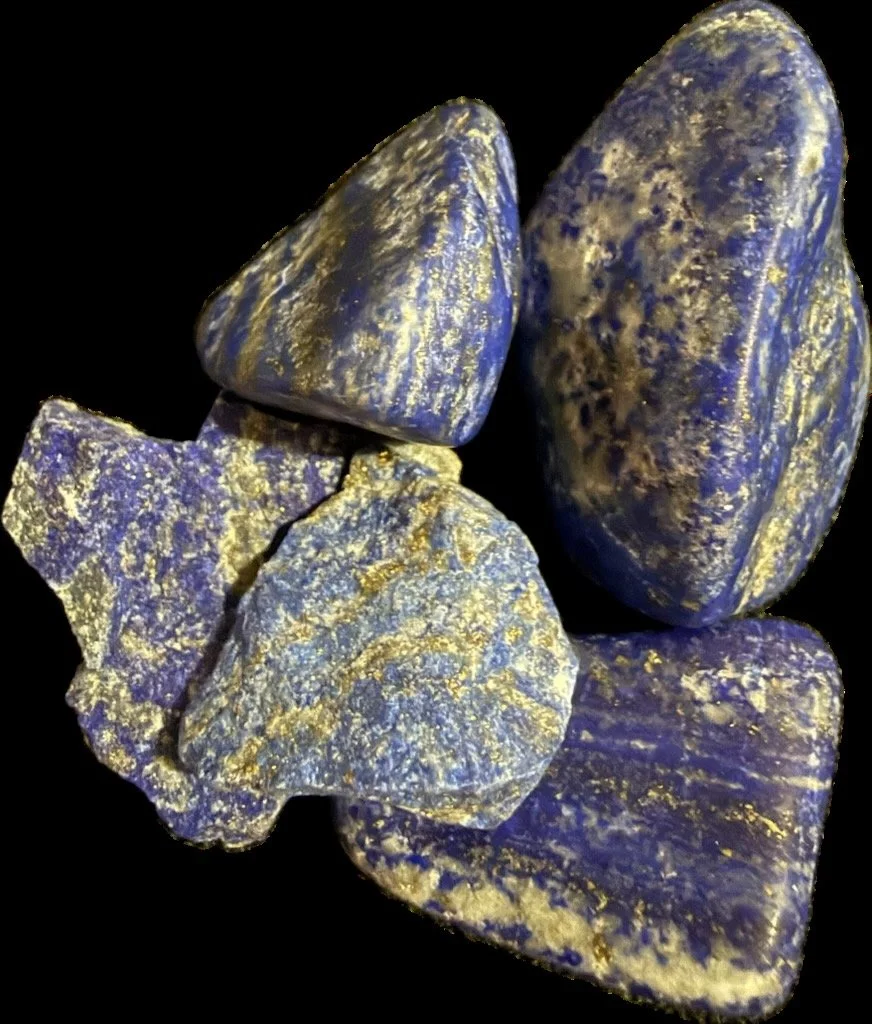
This deep ultramarine stone is not a single mineral but a rock composed primarily of lazurite, along with calcite and flecks of pyrite. These metallic inclusions often appear like tiny stars scattered across a night sky.
The most famous and historically significant deposits lie in the mountains of Badakhshan, Afghanistan, where lapis has been mined for more than 6,000 years.
Ancient civilizations treasured the stone for both its beauty and rarity. In ancient Egypt it adorned jewelry, amulets, and royal burial artifacts. During the Renaissance, ground lapis lazuli was used to produce ultramarine pigment, once the most expensive paint in the world.
Geologically, lapis forms through metamorphic processes when limestone deposits undergo intense heat and pressure, allowing complex mineral reactions to produce lazurite.
The stone’s deep blue color has long been associated with depth, wisdom, and celestial symbolism.
Within Quiet Alchemy, Lapis Lazuli embodies ancient knowledge carried through time.
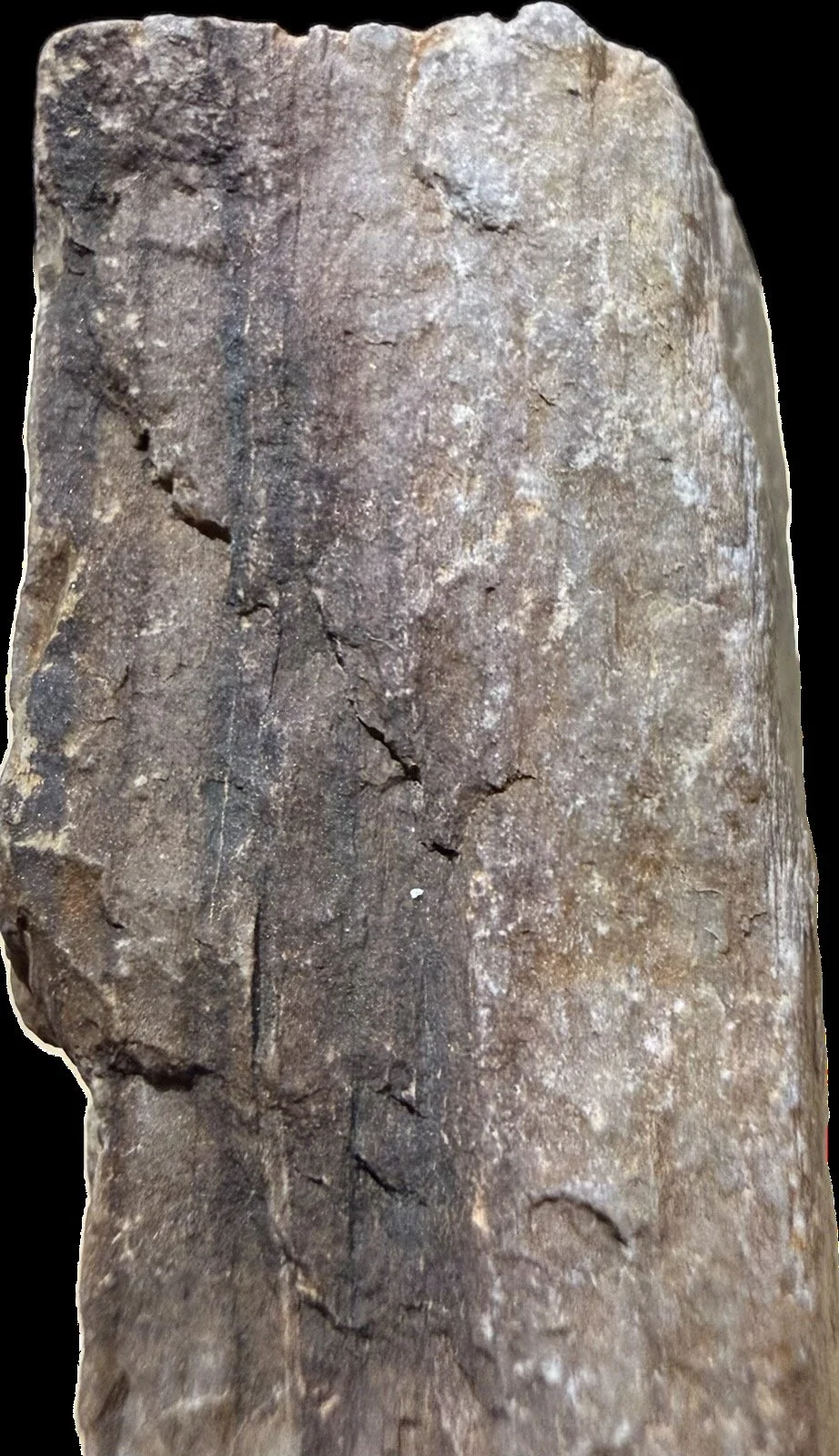
Petrified Wood
Petrified wood is one of the most remarkable examples of fossilization found in the natural world. Unlike ordinary fossils that preserve only impressions or partial remains, petrified wood preserves the original structure of ancient trees in extraordinary detail, preserving intricacies even down to the cellular level.
The process begins when fallen trees are rapidly buried by sediment, volcanic ash, or mud, protecting them from decay. Over time, groundwater rich in dissolved minerals flows through the buried wood. As the organic material slowly breaks down, silica and other minerals carried in the water gradually replace the original plant tissue.
This process, known as permineralization, can take thousands to millions of years. Eventually the wood is transformed into stone while retaining the original growth rings, grain patterns, and internal structure of the tree that once lived.
Most petrified wood forms primarily from silica minerals such as quartz, chalcedony, and opal, though trace elements often produce a remarkable range of colors. Iron oxides can create reds and yellows, manganese may produce purples, and carbon or other minerals can generate deep blacks and browns.
Some of the most famous deposits occur in locations such as the Petrified Forest of Arizona, Madagascar, Indonesia, and Argentina. Many specimens date back more than 200 million years, originating from forests that existed long before the rise of modern mammals.
Because petrified wood retains the structure of living trees while existing entirely as stone, it represents a rare meeting point between biology and geology. A captured moment of life preserved and transformed by deep time.
Within Quiet Alchemy, petrified wood stands as a symbol of endurance and transformation. What was once living matter has crossed the boundary between life and stone, carrying the memory of ancient forests forward across millions of years.
It is not merely a fossil. It is a record of time itself.
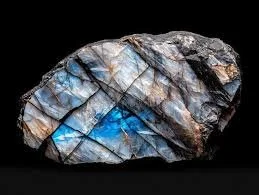
Labradorite
Labradorite is a feldspar mineral celebrated for one of the most captivating optical effects found in nature. When light strikes the stone at certain angles, flashes of blue, gold, green, and violet appear to move beneath the surface.
This phenomenon, known as labradorescence, occurs because microscopic layers within the crystal structure refract and scatter light in complex ways, producing shifting bands of iridescent color.
The mineral was first identified in the late eighteenth century on the coast of Labrador, Canada, where the stone was discovered within ancient igneous rock formations. Today it is also found in locations such as Finland, Madagascar, and parts of Scandinavia.
Labradorite forms within basaltic and anorthosite rock bodies that crystallized deep within Earth’s crust millions to billions of years ago. When polished, the stone reveals flashes of color that appear almost luminous against its darker base.
Because the optical effect depends entirely on the angle of light, labradorite can appear subdued one moment and suddenly radiant the next.
Within Quiet Alchemy, labradorite represents the hidden brilliance that emerges only when light meets the stone in precisely the right way.
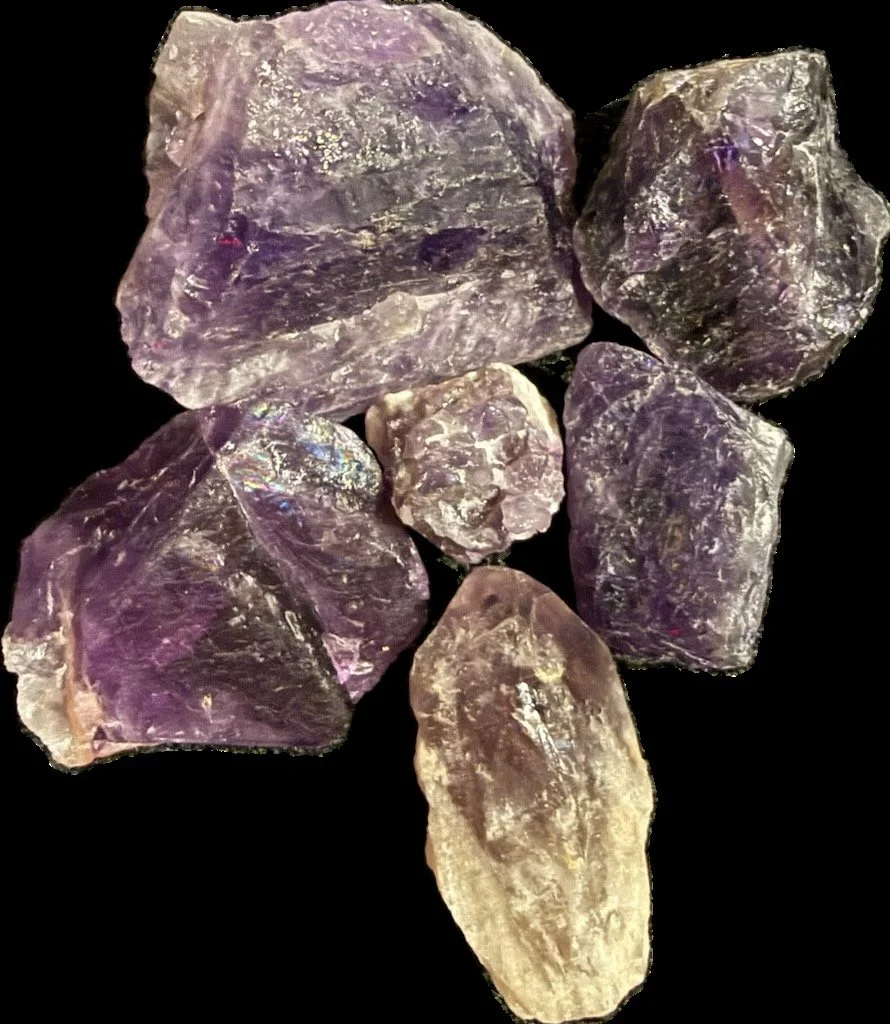
Amethyst
Amethyst is one of the most recognizable and widely admired varieties of quartz.
Its distinctive purple color results from trace amounts of iron within the crystal lattice combined with natural radiation exposure over long periods of time.
Amethyst typically forms inside volcanic cavities known as geodes, where mineral-rich fluids slowly deposit layers of quartz crystals. Over thousands or millions of years, these crystals grow inward from the walls of the cavity, creating spectacular crystal-lined chambers.
Major deposits occur in Brazil, Uruguay, Zambia, and Russia, where entire cathedral-sized geodes have been discovered.
Amethysts have been prized since antiquity. The name derives from the Greek word Amethystos, meaning “not intoxicated,” reflecting the ancient belief that the stone protected its wearer from drunkenness.
Today it remains one of the most beloved gemstones due to its clarity, durability, and rich violet hues.
Within Quiet Alchemy, Amethyst represents clarity of mind and the quiet expansion of possibility.
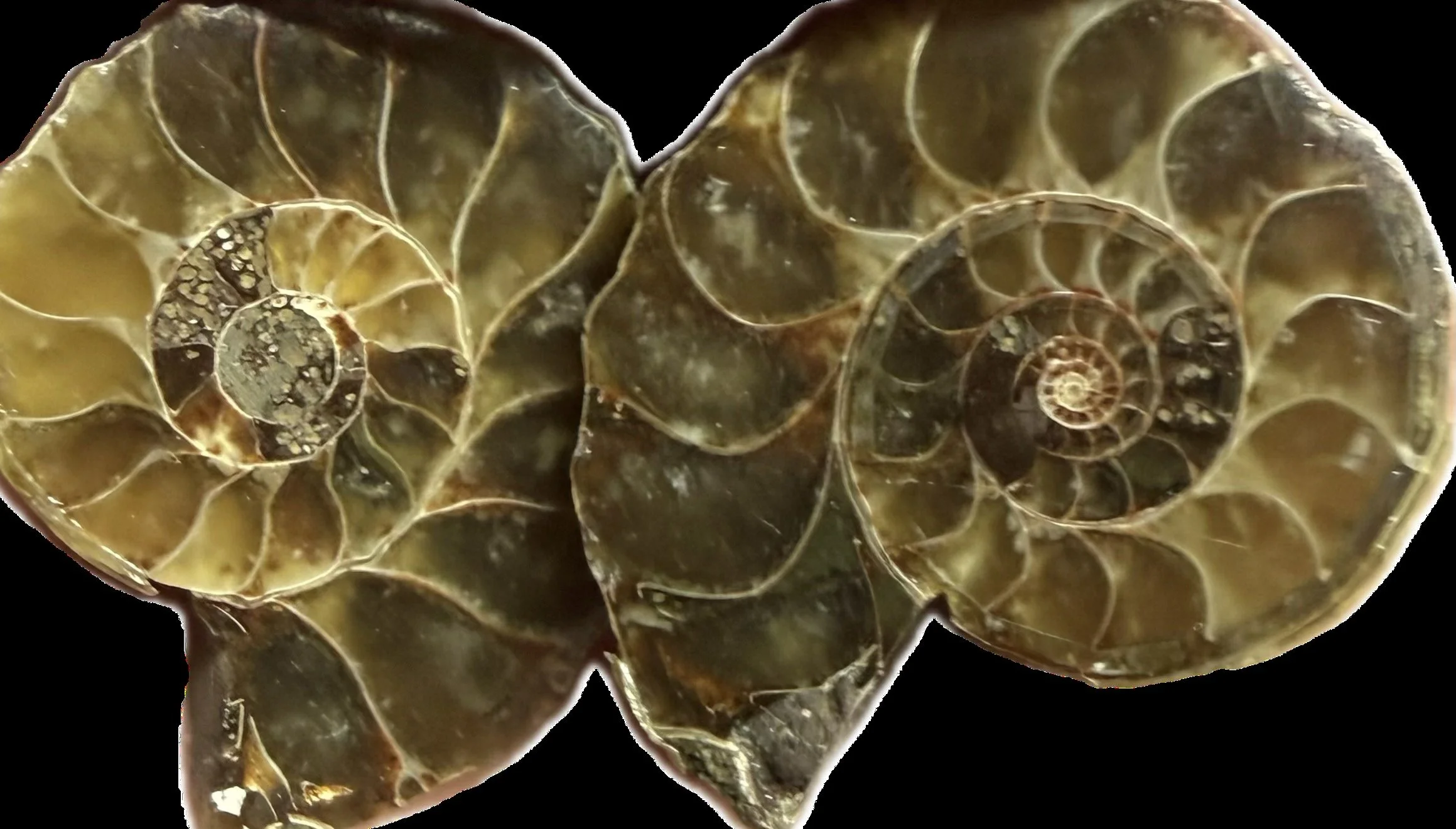
Ammonites
Ammonites are among the most recognizable and fascinating fossils in the geological record. These spiral-shelled marine animals belonged to a group of extinct cephalopods related to modern squid, octopuses, and nautiluses.
Ammonites first appeared in Earth’s oceans more than 400 million years ago and flourished for hundreds of millions of years before disappearing during the mass extinction event that ended the age of dinosaurs approximately 66 million years ago.
Their distinctive coiled shells were divided into internal chambers. As the ammonite grew, it sealed off older chambers and occupied the newest outer chamber, using gas and liquid within the shell to regulate buoyancy as it moved through ancient seas.
When ammonites died, their shells often settled into soft marine sediments where they were gradually buried. Over immense spans of time these sediments hardened into stone, and the shells themselves were replaced or preserved by minerals through fossilization processes similar to those that form petrified wood.
Some ammonite fossils have been transformed into shimmering mineralized specimens containing calcite, pyrite, or even iridescent aragonite. These fossils preserve the intricate geometry of the original shell with extraordinary detail.
Within Quiet Alchemy, ammonites represent the enduring geometry of life across deep time with a spiral record of ancient oceans preserved in stone.
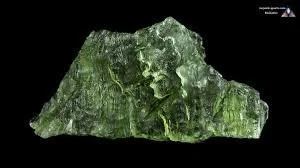
Moldavite
Moldavite is not merely a gemstone, it is the product of a violent cosmic event.
Approximately 15 million years ago, a massive meteorite struck what is now southern Germany, forming the Nördlinger Ries impact crater. The immense energy released during the collision vaporized and melted surrounding terrestrial rock, launching molten material high into the atmosphere.
As this material cooled while falling back to Earth, it solidified into irregular pieces of natural glass known as tektites. Moldavite is the variety of tektite found primarily in the Czech Republic, where these green fragments eventually settled across the surrounding landscape.
Unlike volcanic glass such as obsidian, Moldavite formed during an impact event involving both extraterrestrial energy and terrestrial material. Its distinctive olive-green color and intricate surface textures result from rapid cooling and atmospheric sculpting during its flight through the sky.
Because moldavite formed from a singular geological event, its deposits are limited and finite. Every specimen represents a fragment of a moment when cosmic forces reshaped the Earth’s surface.
Within Quiet Alchemy, Moldavite represents transformation through impact. The meeting point of celestial violence and earthly material.